When installing an AC, you expect the unit to improve the temperature in your home by cooling it effectively. Unfortunately, ACs, like other machinery, experience problems and develop faults that hinder their efficiency. As a result, the AC can fail to cool your home effectively. Below are a few reasons why this may happen and what you should do if it happens.
- When the Cooling Coils Become Too Dirty
The AC has a set of both indoor and outdoor coils. The indoor coils absorb hot air from the house, and the outdoor coils transfer heat from the house to the outdoors. These coils are instrumental in the heat transfer process and eventual cooling of the space in your home. Any accumulation of dust or dirt on the coils tends to insulate the coils, interfering with the process of cooling your home.
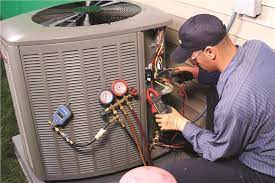
Unfortunately, in a place like Las Vegas, where it gets very dusty, this can be a major issue since even the best filters cannot prevent dust from getting in the filters. The best you can do is have your HVAC professional come in for a regular tune-up session and have the unit properly cleaned. When the coils are free from dust, they function better, and the AC becomes more efficient.
- Leaking Refrigerant
An AC cools the house because of the refrigerant that runs through the coils. This refrigerant flows through the conditioner coils and moves the heat in your home to the outdoor condenser unit. If the refrigerant is compromised and there is a leak, the cooling process will also be breached. It is possible to have the condenser in perfect working condition but still fail to attain optimal cool temperatures because of the leaking refrigerant. Consequently, your house will fail to reach an optimal, comfortable temperature.
- A Case of a Blocked Condenser
The condenser unit of most central HVAC units is located outside the house. Unfortunately, they are easily blocked by bushes, leaves, and shrubberies due to their position. These tend to block the condenser unit and interfere with its ability to release the heat from the condenser coils. The heat released from your home will not be adequately removed, thus interfering with the overall cooling process.
- When Dealing with a Case of Dirty Filters
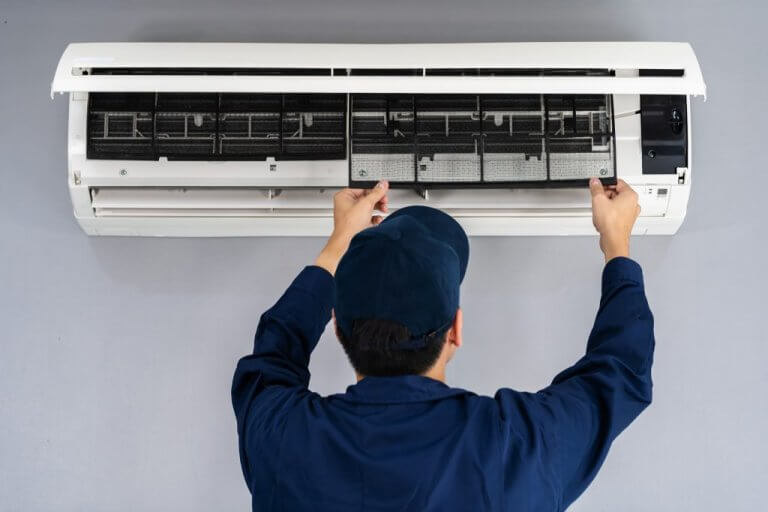
Dirty air filters can cause significant issues, especially when cooling your home. These filters help trap any dirt and debris that finds its way through the AC. However, when it accumulates to levels where it blocks the filter itself, it may cause air restriction that it is supposed to prevent. When this happens, very little air passes through the evaporator coils, meaning that most of the warm air pulled from your house will not be cooled effectively. The air blown back to the house will be warm, despite having a fully efficient AC.
- Problem with the Compressor
The compressor ensures the unit’s refrigerant runs at optimal pressure. This means it is one of the most vital components of the entire AC unit. When something happens to the condenser, it is possible that the heated air transfer system will be grounded and the cooling process halted. Once the condenser begins malfunctioning, you can ensure that your house will not be adequately cooled. It would be best to have an HVAC technician check it out and provide recommendations. Depending on the issue, you may have to replace the condenser.
- The System is Old
All machinery has a lifespan beyond which they fail to be effective and efficient. It is possible to experience cooling and heating problems with your HVAC system if it is old and outdated. As the unit approaches its end, it will fail to cool the house as expected, not because it has a problem but because it’s time to replace it with a new modern unit. The energy efficiency deteriorates as the unit approaches its life’s end.
Fortunately, before the unit gives up completely, it will exhibit signs that it may be time to replace. It’s best not to hold on to an old unit since its performance will be poor, and the chances of cooling your space are minimal. An experienced HVAC technician can recommend the right-sized unit for your space and needs.
- Poorly Set Thermostat
The setting on your thermostat can potentially cause your AC not to cool the house as expected. The thermostat is the first place you need to check when you notice a temperature difference. When the fan setting is on, the AC blows air even when the system is not in a cooling phase.
This will make the air coming out of the vents feel warm since only warm air is blowing out. Make sure to adjust the setting on the thermostat to Auto, as this controls the cooling cycle. You also want to check the coolant and heat setting since the AC will only cool your house if the setting is on cool.
Want to keep your HVAC unit running smoothly year-round? Your AC will perform better and cool your house better if you ensure you get your unit on a scheduled maintenance plan.