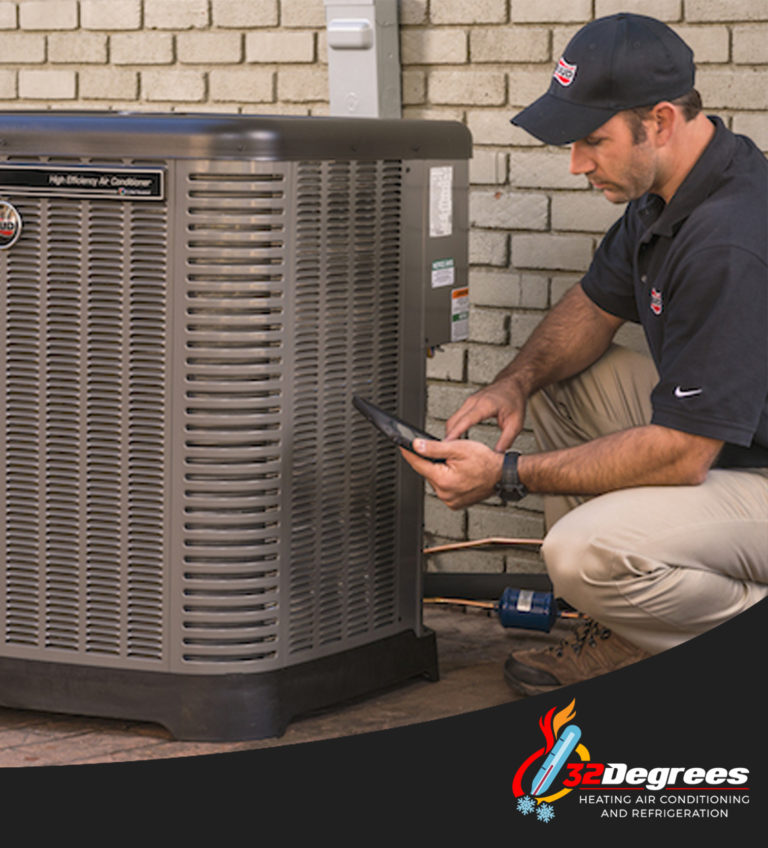
The part of your HVAC system kept outdoors is called the condenser unit and is considered the workhorse of an air conditioning system. Its components will include the condenser, compressor, and fans. Its work is to channel heated air out of the indoor space, facilitating cooling. It does this by pumping refrigerant that converts from gas to liquid form before returning to the indoor unit to absorb more heat that will again be dissipated through the outdoor condenser unit.
When the temperatures are high in Las Vegas, these units will work even harder to try and cool the interior of buildings. With temperatures reaching over 100 degrees during the summer months, it is not uncommon for ACs to break down and require a technician to come in for repairs.
This part of the AC system is fundamental to allowing the home to be heated or cooled. Like any other appliance or part of an HVAC system, when this unit works harder, it runs less efficiently and causes energy bills to rise. It also becomes more prone to breakdowns. Many homeowners consider shading this unit as a good way to improve its efficiency, but does this work?
What is shading?
Shading involves covering up the area around the outdoor unit, so it is not directly under the sunlight. This cover is believed to help lower the outdoor air and ground temperature around the system and allow the unit to run more smoothly with less risk of overheating or suffering other breakdown issues. Shaded units are also estimated to suffer less wear and tear, prolonging their lifespan. However, some experts oppose these views and consider shading a contributor to AC problems rather than a solution or simply an ineffective measure.
Does shading help ACs?
To some extent, yes, but often the benefits can be exaggerated. Though ACs are more prone to breakdowns during the high heat of summer, their construction makes them resilient to weather extremes. It means they are designed to capably withstand even the sweltering heat of Las Vegas without the need for shade.
Often, shading will interfere with good air intake and promote moisture buildup. The unit will not be able to dissipate the heated air it releases properly, and the shading can cause the same air to be recirculated and reduce efficiency. If whatever you use to provide shade interferes with this ventilation, it can force the compressor to work harder than it needs to and cause it to break down quickly. Condensers need ample room to breathe and function properly.
Some structures used for shading, like trees and bushes, placed too close to the unit can also encourage insect infestations to come closer to the home and get into the unit. Using trees, bushes, and other plants as shading can also cause plant debris like leaves and flowers to float and get into the unit, causing blockages and other damage. This can make your AC unit work less efficiently and require more cleaning and repairs.
Any type of plant planted near your HVAC system can attract wildlife looking for relief from the sun’s rays. Some animals may choose to hibernate in your unit during the summer and winter months. These situations can worsen rather than improve the AC’s efficiency. They can also cause expensive repairs from chewed wires, animal droppings, or smells that can come from an animal expiring in your system.
However, smaller window air conditioning units can benefit more from shading as they do not rely on as much airflow and are kept off the ground, thereby avoiding much exposure to animals, insects, and plant debris. It is possible for shading to help these units increase their efficiency by as much as 10%. For these kinds of units, you can opt to provide shading by mounting an awning over the window or installing the outdoor unit on a north or east-facing side of the building that gets less sun.
How best to provide shading?
If you feel compelled to provide your outdoor AC unit with shading, be careful about how you go about it. First, ensure sufficient space allowance around the unit, so you do not interfere with ventilation.
Aim not just to shade the outdoor unit but rather the entire home. Invest in landscaping that will create a cooler micro-climate around your property, thus enabling your AC system to work more efficiently at controlling the temperature in your home. It will make the air around your compressor cooler and allow it to run more efficiently. You can do this by adding more trees and bushes around your home. The cooler you make the local outdoor environment, the cooler your indoor environment will be.
Be sure to consult with your HVAC specialist before you undertake any work to add shading around your outdoor AC unit. It is best to avoid interfering with the original layout of your HVAC system until you have consulted a professional. They can advise you of the best option given your environment that will improve the efficiency of your unit. Note that regular maintenance and cleaning are other factors that can strongly influence the efficiency and effectiveness of your AC system, so remember to set up a regular maintenance schedule.